










If you are like most wedding planners I coach, talking about wedding budgets is likely NOT one of the top reasons you became a wedding planner. In fact, there’s a good chance the idea makes you sweat a little bit (you’re not alone). Today, I want to share all about creating a wedding budget template for planners, specifically HOW you can use one and why it makes your life a lot easier. Want one done for you? Grab mine here (you actually get more than the best wedding budget template for planners – you get a complete client dashboard you’ll LOVE to use!).

Why a Wedding Budget Template for Wedding Planners is Important
First, let’s talk about why you need a wedding budget template (over an excel sheet that you start from scratch every time). You know we LOVE a template over here (that’s why we have so many in our shop), but here’s exactly how it guides the planning process:
- Helps You Keep Track of Every Penny: Using a template significantly decreases the chance something will be missed along the way. This way, you’re always aware of where the money is going, ensuring you stick to the budget and avoid any surprise costs that could throw you off course.
- Balancing the Books: Imagine you’re dividing a pie among various wedding line items. A budget template helps you slice it just right, so every piece—be it the venue, decor, or catering—gets its fair share, preventing any chance of overspending in one area and coming up short in another.
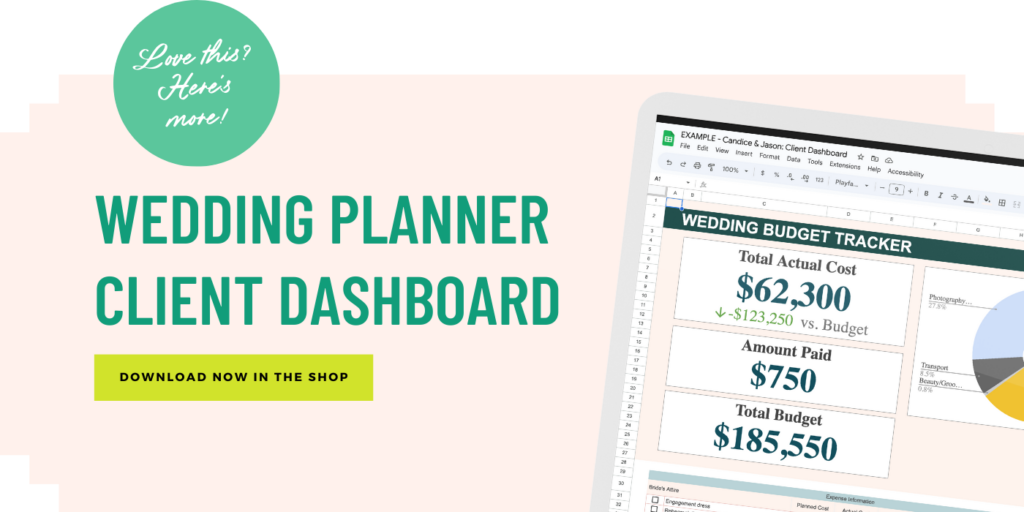
- Building Trust Through Transparency: This is probably the most important one! Being open about finances with your clients isn’t just good practice; it’s the foundation of a trusting relationship. A detailed budget lets you have honest conversations about costs, set realistic expectations, and work together smoothly. Plus, with our Client Dashboard through Google Sheets, everything gets updated in real time so everyone’s on the same page all the time.
Creating a Comprehensive Wedding Budget Template
Now that we’ve talked about how important it is to have a budget template, it’s time to dive into crafting one for your clients. Here are 3 simple steps to get you started.
1. Identifying Key Budget Categories
When couples hire you, they are expecting you to know what they don’t right? And that starts with identifying key budget categories and familiarizing yourself with the average spend in your city (with the vendors who are producing the kinds of weddings you want to book!).
From securing the dream venue and choosing the right catering options to selecting the wedding attire, decorating the space, and setting aside a contingency fund for those just-in-case moments—each category is a building block towards a rock-solid budget you can feel confident presenting to your client. These carefully chosen categories help you distribute your funds wisely, ensuring that every detail contributes to the overall vision of the event.
But while I have you hear, as your business coach I also want to say, it’s NOT your job to create miracles when they don’t have money to pay for miracles. Your job is to educate them and set realistic expectations on what their money will get them. I talk a LOT more about this (and navigating other sticky situations) in my Wedding Planner Budget Guide here!
2. Setting Realistic Financial Limits for Each Category
While having a template is great, remember, every wedding is unique, and so are its expenses. Some couples might decide to skip certain costs to focus their budget more on what truly matters to them. As their wedding planner, your role is to guide them through these choices with understanding and insight, helping them allocate their funds in a way that best reflects their priorities and dreams.
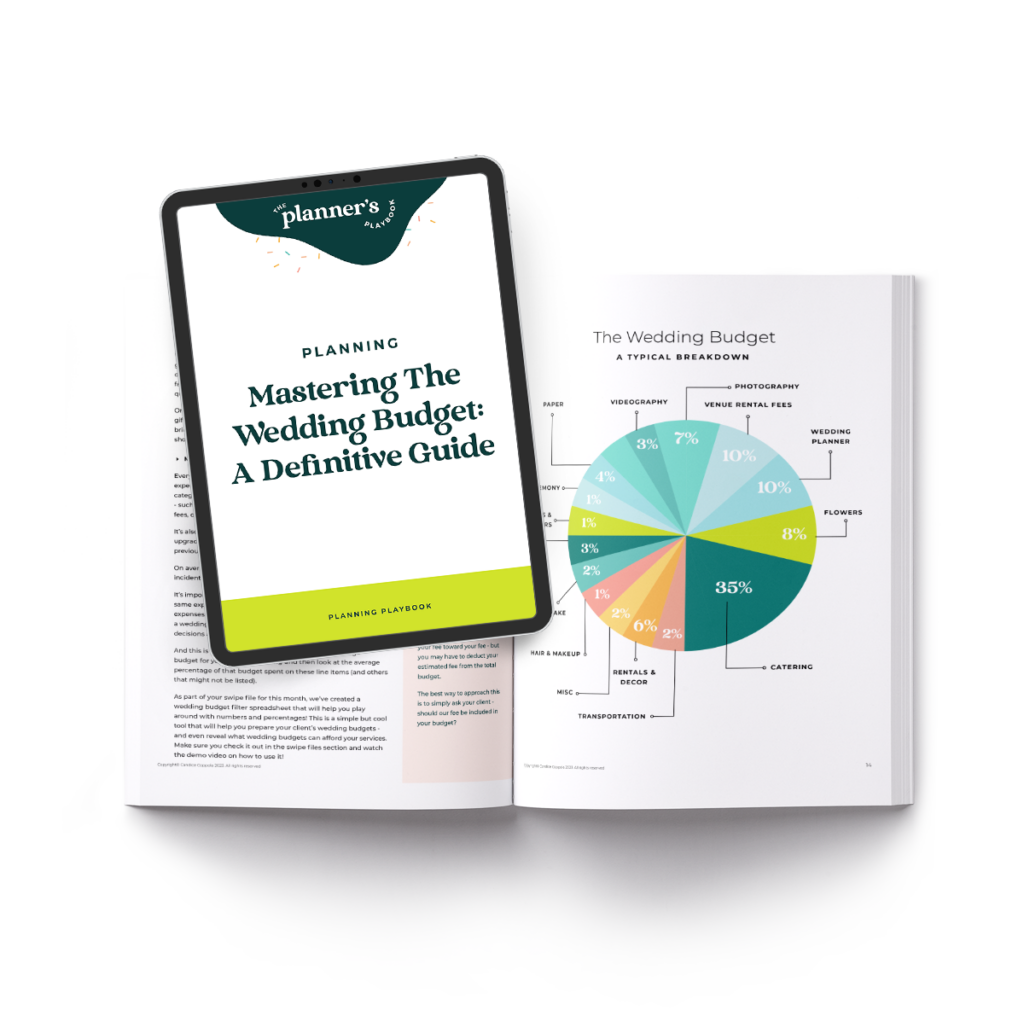
In my Wedding Planner Budget Guide, I detail AVERAGE percentages to offer clarity and support in this process. Researching up-to-date market costs and understanding typical industry charges are key steps in making sure you can confidently create a spending plan.
3. Use a Spreadsheet for Budget Tracking
We’ve already talked about why I love Google Sheets (and use it in my client dashboard). While a pretty pdf is good for a lot of things, you need formulas and calculators to keep track of the many moving pieces that go into creating effective budget templates.

Frequently Asked Questions about Creating a Wedding Budget as a Wedding Planner
Before I let you go, here are some of the most frequently asked questions I hear from wedding planners creating wedding budget templates for their clients.
How detailed should a wedding budget template be?
I hate to give an answer like this but a budget template should be as detailed as it needs to be. It should cover all possible expenses, from the big-ticket items like venue and catering to the finer details like gratuities and emergency funds. The more detailed your template, the less likely you’ll encounter unexpected surprises along the way. With that said, having too many line items will likely overwhelm your client, so it’s okay to group categories together if it makes sense to do so!
How do I handle a situation where the couple’s budget is unrealistic for their vision?
Ah, the classic champagne taste on a beer budget dilemma. It’s a common challenge, but it’s also an opportunity to showcase your expertise and creativity. Start by setting realistic expectations—educate your clients on what their budget can genuinely achieve. Then, work together to prioritize the elements that are most important to them.
Remember, your role isn’t to perform miracles (with no money to pay for miracles!) but to guide them to make informed decisions that align with their budget and vision. Try to be encouraging about what their budget CAN help them achieve, but make sure you aren’t overpromising. Trust me, they will come back and blame you if you do!
Can I customize the wedding budget template for each client?
Absolutely, and you should! While a template serves as a great starting point, no two weddings are the same. Customize the budget to reflect each couple’s unique priorities and preferences. This personal touch not only makes your clients feel cared for but also ensures a more accurate and effective budgeting process. In my Wedding Planner Budget Guide, I walk you through this process step-by-step (from creation to having your couples sign off on the budget for approval!).
What’s the best way to track expenses and stay on budget?
Embrace technology! I’ve mentioned this throughout this article but using a spreadsheet tool like Google Sheets, like we do in our Client Dashboard, allows for real-time updates, shared access, and formula-based calculations to keep everything on track. It’s efficient, transparent, and reduces the likelihood of errors, making it a win-win for you and your clients.
How do I approach budget discussions without making it awkward?
As a wedding planner, you need to get confident talking about money. Transparency and professionalism are key. Approach the topic openly and honestly from the start. Frame it as a collaborative effort to ensure their dream day is achievable within their means. Encourage questions and provide clear, detailed explanations. Remember, your confidence and expertise can make these discussions feel more like exciting planning sessions rather than awkward money talks. I go over this in DETAIL in my Wedding Planner Budget Guide.
What if the budget needs to be adjusted mid-planning?
Flexibility is part of the job. If adjustments are necessary, it’s your job to communicate with your clients promptly and transparently about the reasons and implications (ie. if we increase THIS, we’ll have to decrease THIS, or you’ll go over budget). Work together to decide on the best course of action, whether it means reallocating funds from one area to another or finding creative solutions to stay within the overall budget.
The Best Wedding Budget Template for Planners
Listen, if talking about your couple’s wedding budget makes you sweat – you’re not alone. As I hope you can see in this article, it’s one of the BIGGEST hesitations new wedding planners have when working with couples. But remember, templates can make your life a LOT easier (and you WILL get more confident over time. Shop our wedding planner templates here, and make sure to hop on the waitlist for the Planner’s Playbook (our signature membership for wedding planners ready to become the best in the industry!).
Explore More Wedding Industry Resources
- How to Start a Wedding Planning Business
- The Best Wedding Planner Podcasts To Grow Your Business
- Wedding Planner Pricing: How Much Should You Charge As A Wedding Planner? Learn How To Figure Out Your Price
- The Ultimate Wedding Planner Templates in 2024
- Stand Out in a Saturated Market: Performing a SWOT Analysis as a Wedding Planner
- 5 Ways to Make More Money As A Wedding Planner
- How to Book Your FIRST Client as a Wedding Planner
- Here’s What Every Wedding Planner Needs To Include In Their Wedding Design Proposals
- 5 Social Media Mistakes Every Wedding Planner Makes
- What Are The Best Resources For Wedding Planners?
- How To Create An Offboarding Process In Your Biz
- Wedding Pros: Here’s How to Create A Better Customer Onboarding Experience
- How To Start The Wedding Planning Process With Your Clients
- Are You a Disorganized Wedding Planner? Let’s Fix That With These Organized Wedding Planner Tips!
- 2024 Honeybook Review: Is Honeybook Worth It And What You Need To Know Before You Sign Up
For More Wedding Planner Business Secrets Follow Me On Instagram
I haven’t worked this hard or this much in years. I’ll be honest, it’s been both rewarding and exhausting. There’s a lot happening behind the scenes and so much to do. But the one thing driving it all is my passion to help as many wedding and event planners find a forever home for their business that makes the work you do easier. We are so close to being ready 🙏
A special thank you to every client of mine who has encouraged me and cheered me on, and every beta tester who has started using Cue. Your feedback, excitement, bug spotting, ideas, and presence has meant more than I can ever express!
I also want to thank everyone who has signed up for the waitlist, shared Cue, or reached out to me personally. I am SO excited for you to see what we are building for you and your excitement for Cue has motivated me beyond what I thought I was capable of. 💜
There’s still time to get on the waitlist for Cue and see what the fuss is all about. Comment CUEWAITLIST and I’ll send you the link to get in line to be the first to try out Cue when we launch on 12/1!

Still catching up on sharing our April mastermind retreat (because apparently I need six months to recover from hosting 🤣). Here’s day three: WPI at sea.
Every year, I treat the ladies to a catamaran cruise here in Barbados, and every year, I remember why this is a nonnegotiable on our itinerary!
We swam with turtles, had a beautiful lunch, drank wine, did tequila shots, and talked about work and life while floating around in the Caribbean. Honestly, a very productive day in my books!!
One of my favorite things about coaching these women is getting to know who they are outside of their businesses. And getting to spoil a group of women who are usually the ones making everything special for everyone else? I’ll happily do that every year.
I love these ladies. I love this little island. And I love that my job brings us all together, preferably on a boat with someone else handling lunch.
Applications for WeddingPro Insiders are open, and we have a handful of spots. If you want to spend the next year working on your business with us, then come hang out at my house in April 2027 and experience this for yourself, I’d love for you to apply.
Head to the link in my bio for the details, pricing, and application. Come meet your people. 💜💜💜
Special shout out to @breezy_days_barbados for the *incredible* day and to @c10ike for the photos!!
Buying stuff regulates my nervous system 🤷🏼♀️
filed under:












+ show Comments
- Hide Comments
add a comment